
A Giant Otamatone Lured Us Off a Shopping Street — Inside Maywa Denki's "How a Toy Is Made" Exhibition
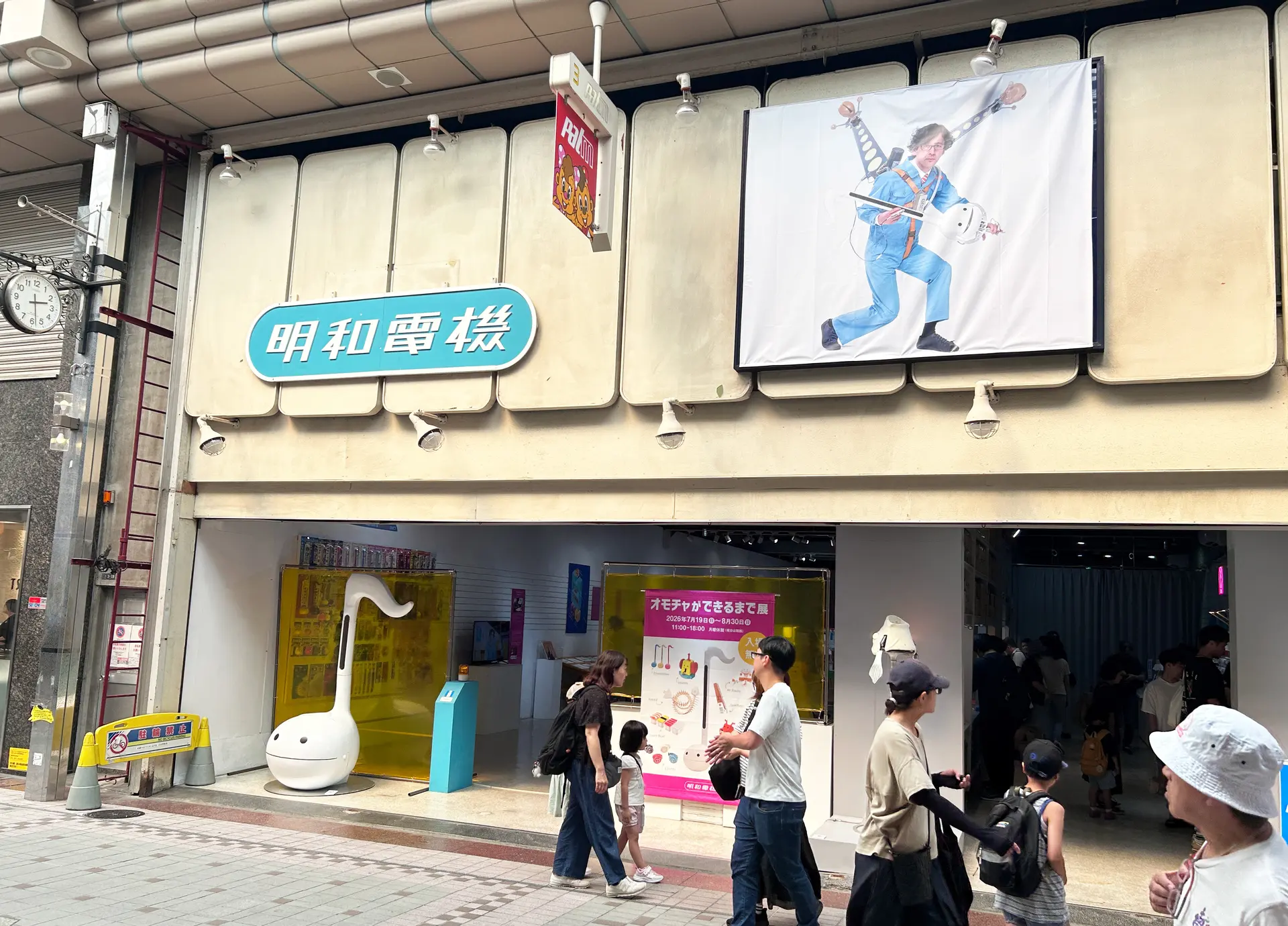 Photo: RAW JAPAN
A Giant Otamatone Lured Us Off a Shopping Street — Inside Maywa Denki's "How a Toy Is Made" Exhibition
A blazing-hot day in Musashi-Koyama, Tokyo. I had errands in the area, so my sons and I grabbed lunch in the Palm shopping arcade and were wandering it aimlessly.
Then, from somewhere, a familiar sound. Pwaoh—pwahh♪ (that's how it sounds to me, anyway).
I turned toward it and there stood a human-sized giant Otamatone, next to a retro "Maywa Denki" signboard and a huge banner of a man in a blue work uniform. What is this? Also: free entry. Before we knew it, three boys had been reeled in by an Otamatone.
That's how we walked into Maywa Denki's "How a Toy Is Made" exhibition.
First: What on Earth Is Maywa Denki?
For the uninitiated: Maywa Denki is an art unit that operates in the guise of a small-town electrical appliance maker. Their uniform is a blue workman's jacket, and their leader is "President" Novmichi Tosa. Everything they make is useless-but-wonderful — what they themselves call Nonsense Machines.
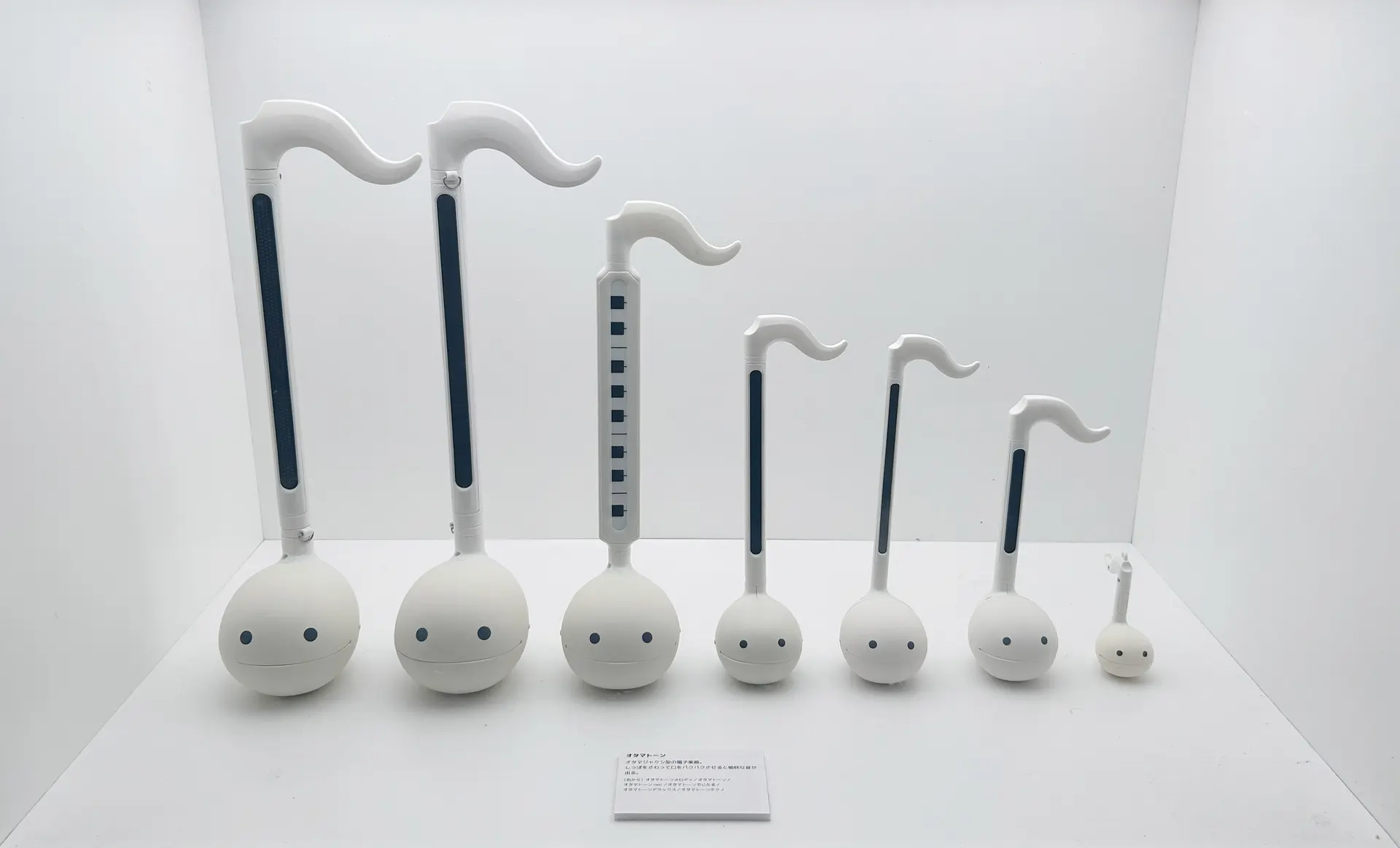
Their most famous creation is the Otamatone, that musical-note-shaped electronic instrument. Since its release in 2009 it has sold over 2 million units across Japan, North America, Europe, and Asia. Press the switch on its tail and it sings; open and close its mouth and the tone changes. It's a deeply unserious instrument that is somehow impossible to put down.

Here's the important part: Maywa Denki's atelier is right here in Musashi-Koyama. They've been based in this neighborhood for 28 years, since 1998. According to an exhibition panel, the President draws his idea sketches not at the atelier but at the Doutor coffee shop in this very shopping arcade. World-famous toys, born in a Doutor.
The fastest way to understand their vibe is the official PV.
The 600-Yen "Card Key" Turned Out to Be a Magic Wand
Inside, the place was packed with gloriously weird toys, and Otamatones were wailing in every corner.
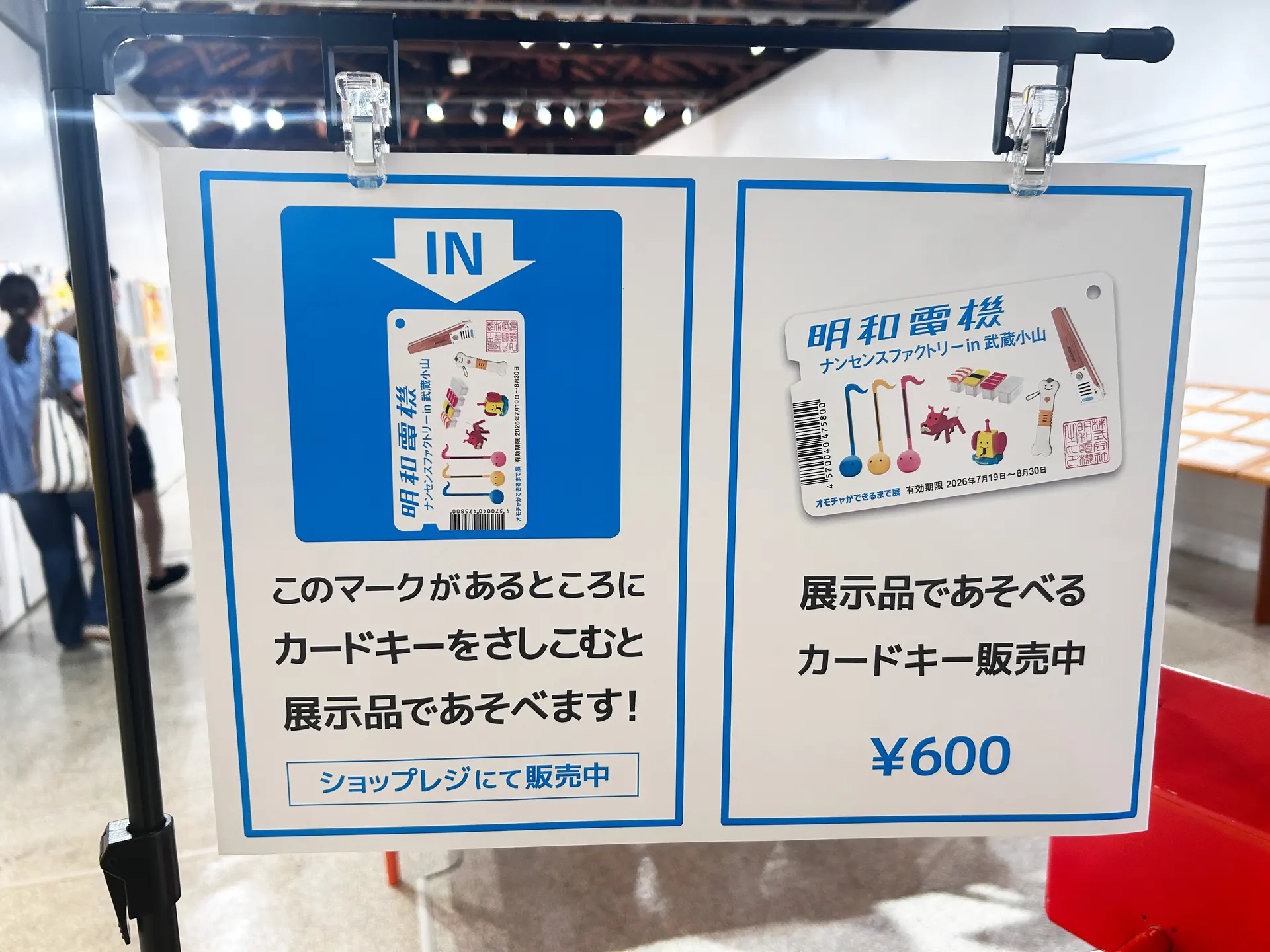
This is not a look-only exhibition — it's hands-on. Next to the exhibits are little slots, and if you buy the card key (600 yen) at the shop register next door and insert it, you can actually play with the toys on display.
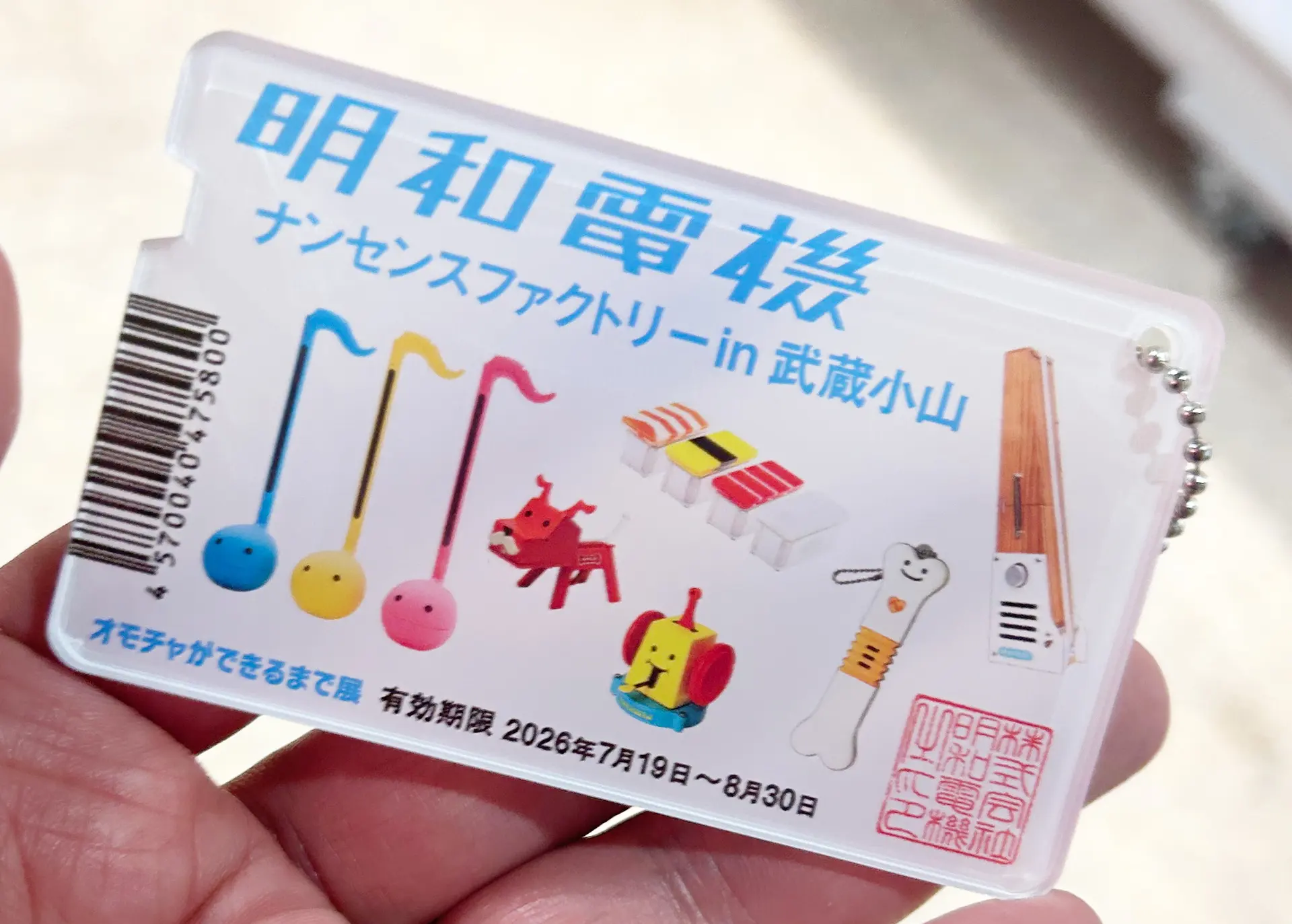
We bought one immediately. According to the staff, one purchase works for the entire exhibition period, as many times as you like — basically a free pass. The card itself looks like a company ID badge, barcode and all. It's a keepsake in its own right.
Card key in hand, my sons went straight for the Otamatones.
The Toy My Kid Loved Most: The GumBass
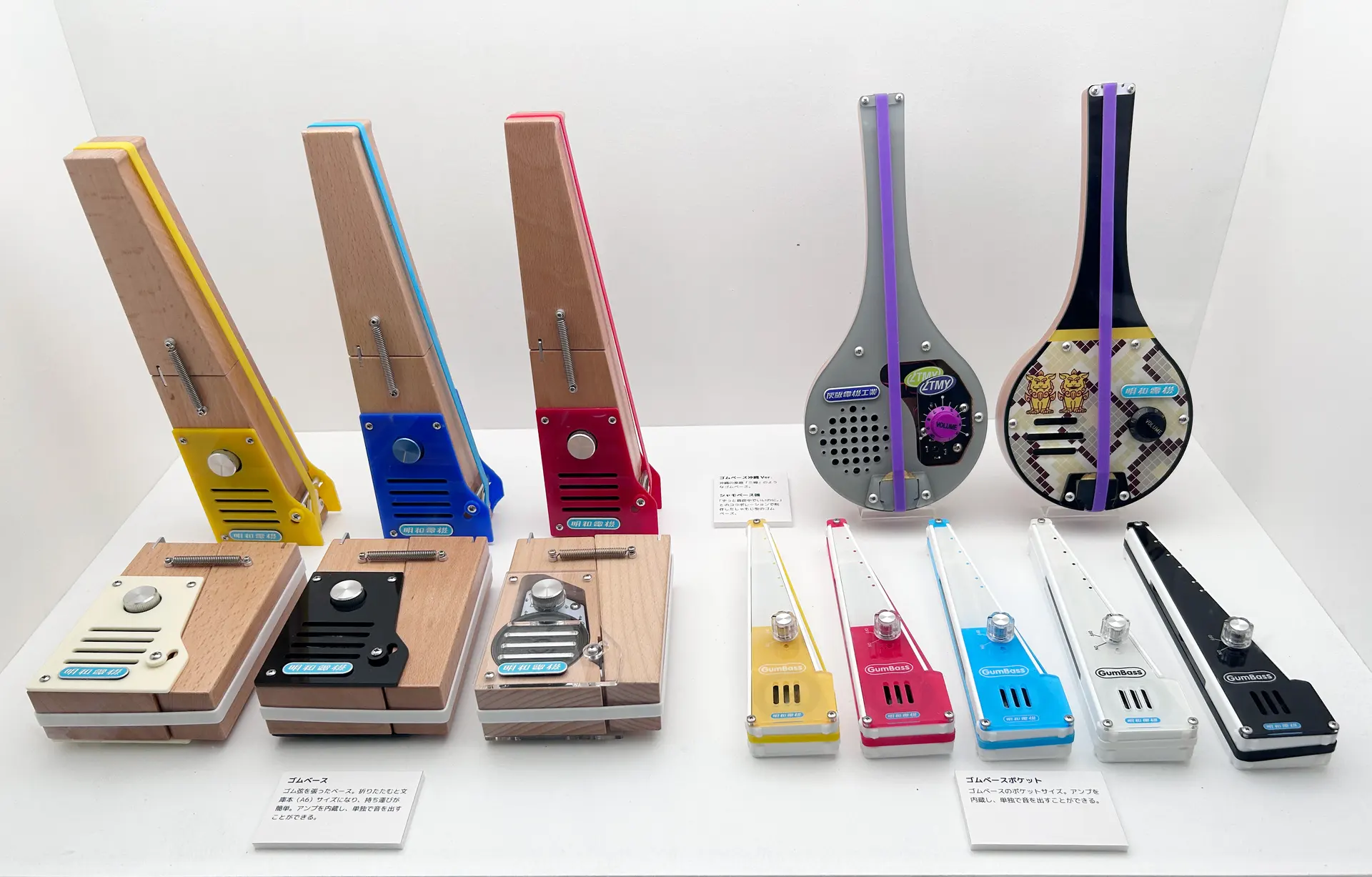
Of everything on display, my son's favorite was the GumBass — a bass guitar strung with the rubber packing cord you'd find at any hardware store. Devised in 1995 by Maywa Denki's Chairman, Masamichi Tosa, it picks up sound with a piezo element and pumps it through a built-in amp and speaker. Rubber strings mean deep bass even at a small size — that's the theory.
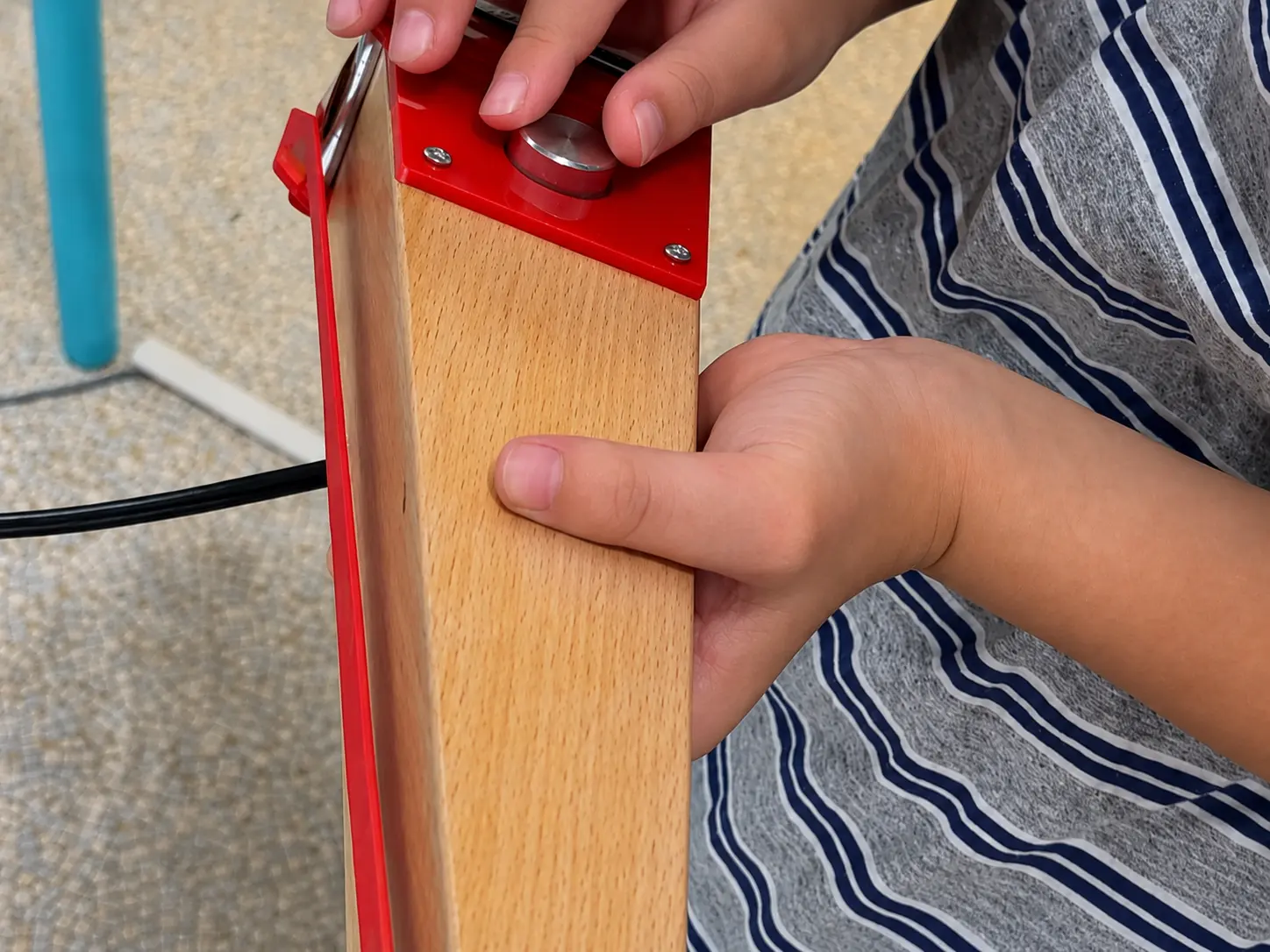
My kid shredded it like Flea of the Red Hot Chili Peppers had descended into his body. Where else in the world can you watch an elementary schooler practice slap bass on packing rubber?
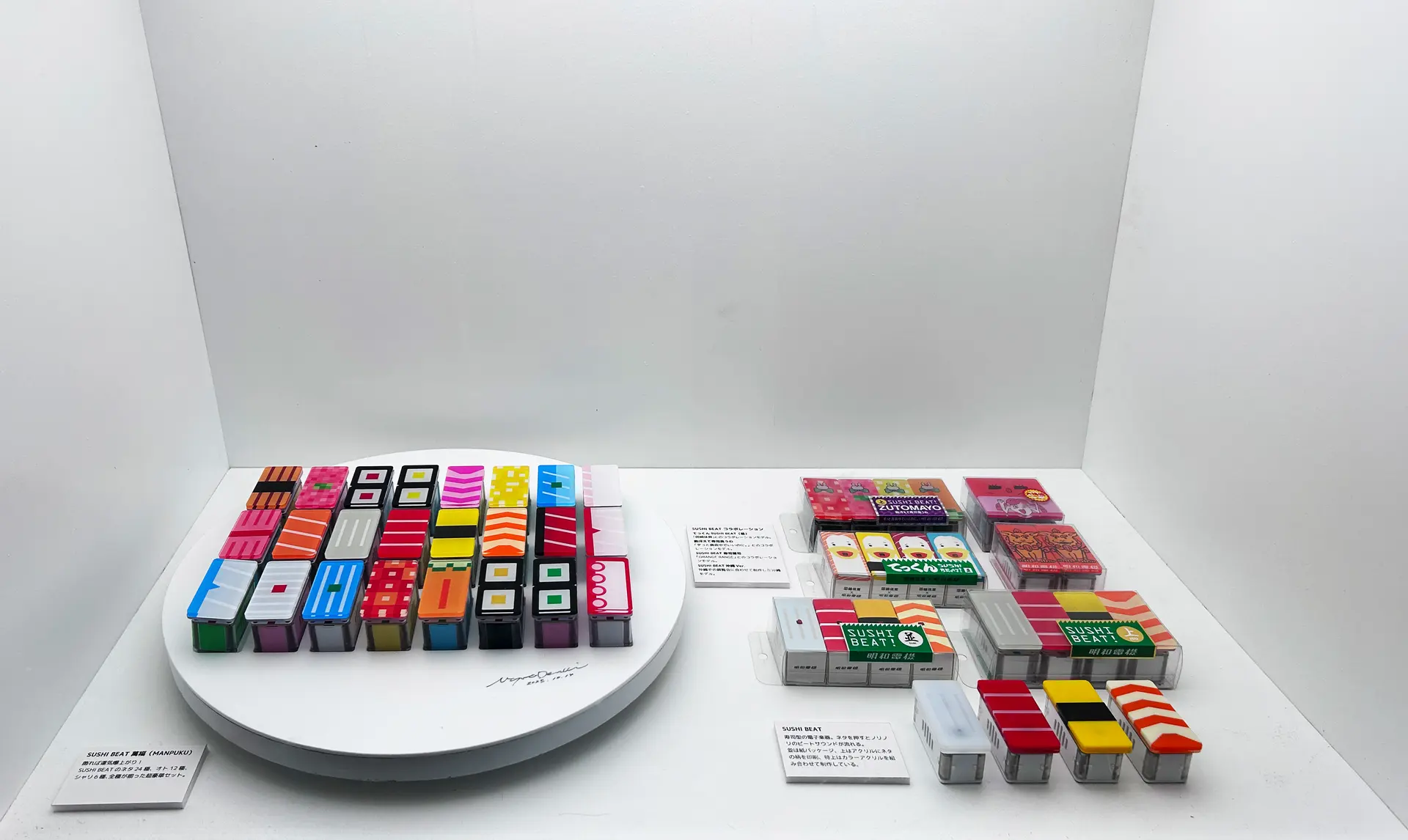
At the sushi-shaped rhythm machine Sushi Beat, my two boys lined up side by side and went full Daft Punk. Tap the sushi, get a beat. Why sushi? You must not ask. It's nonsense — that's the point.
Note: I forgot to photograph the giant playable Sushi Beat, so this is the small one in the showcase. My apologies.
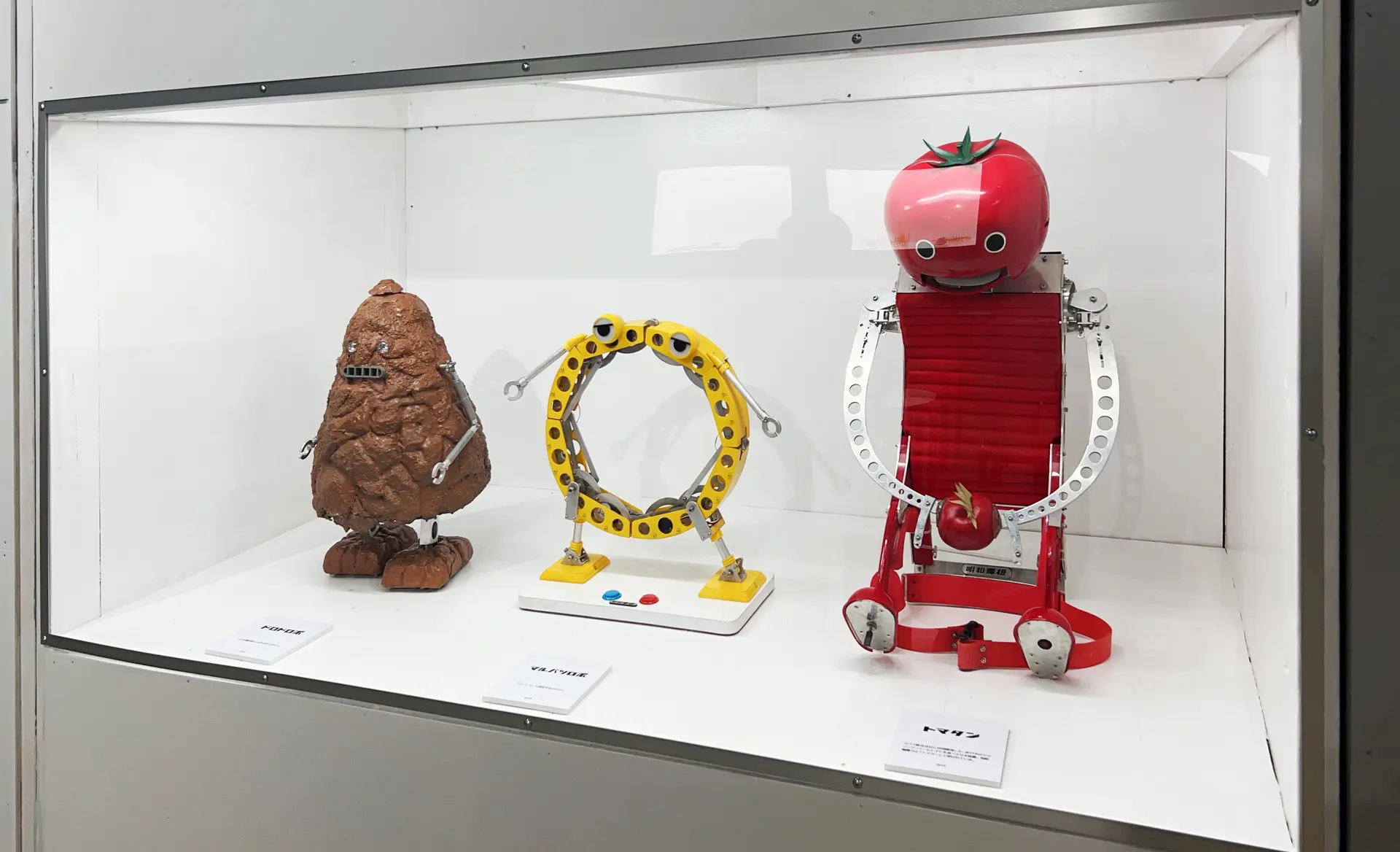
Maywa Denki also builds robots, and the exhibit panel describes them with total honesty: "None of the robots Maywa Denki makes are useful. Their mechanisms are entirely nonsensical, so they are called BACAROBO (stupid robots)." I aspire to this level of confidence.
Watching a Toy "Being Born"
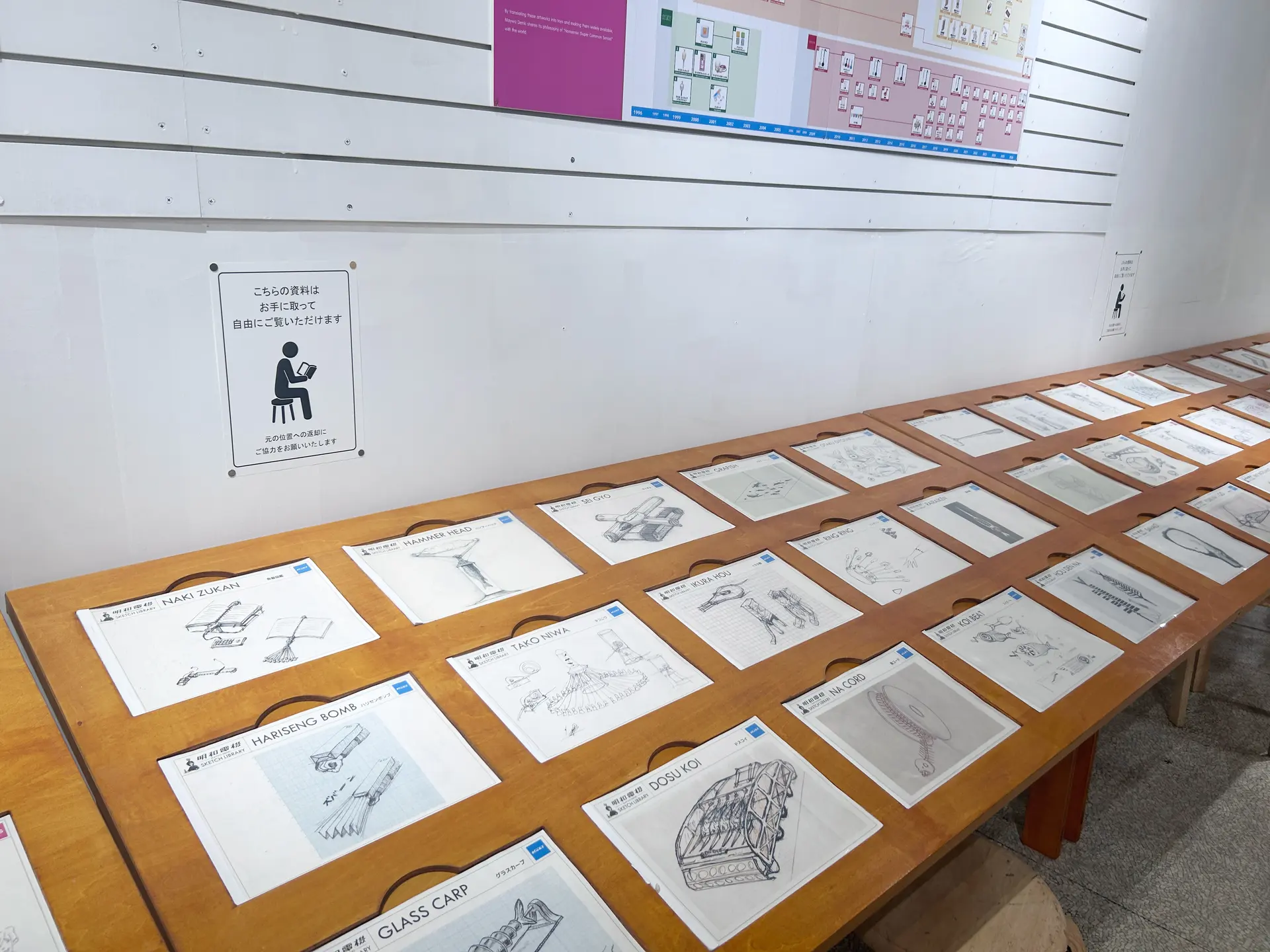
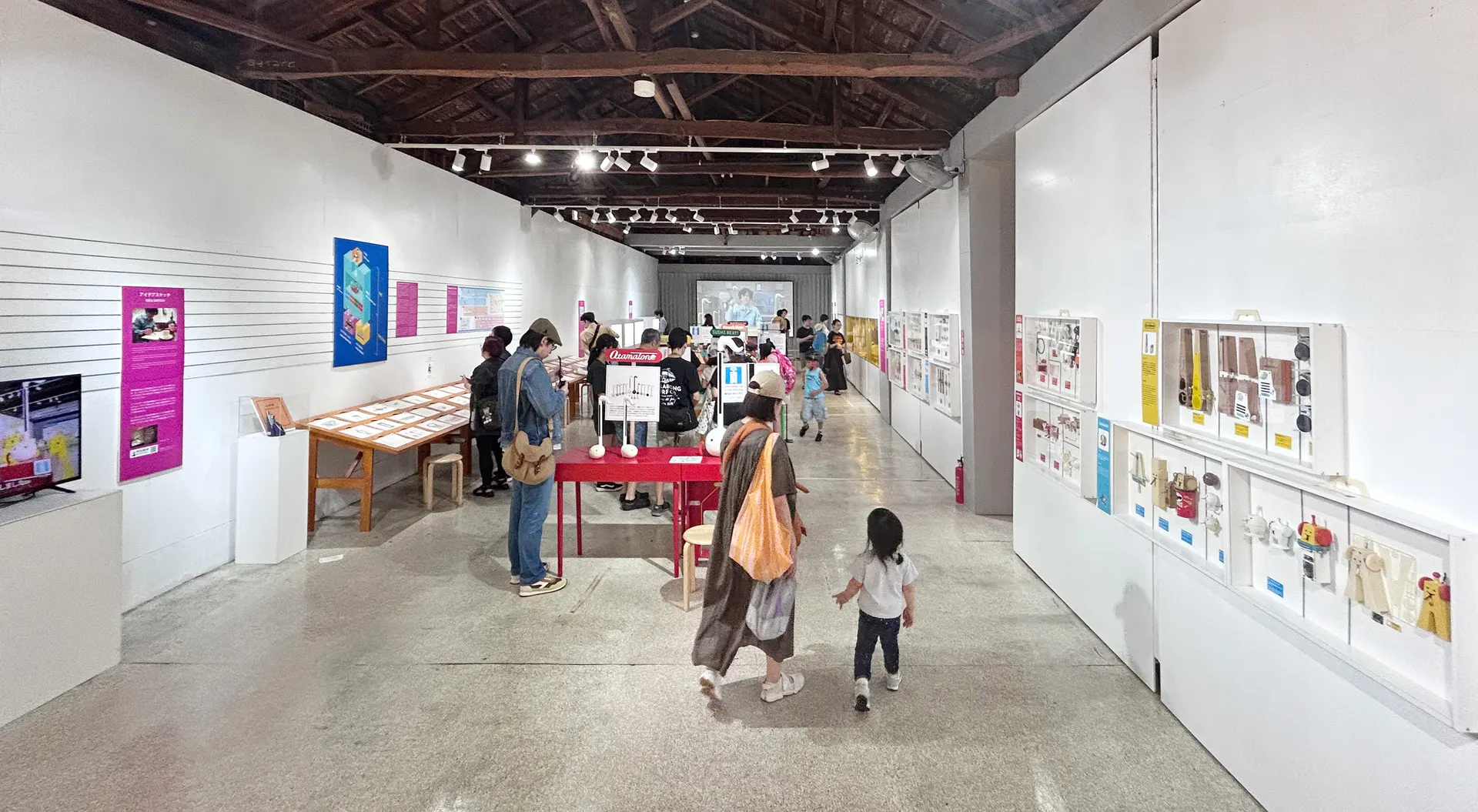
True to the exhibition's title, you can follow the entire journey of a toy: from the President's mountains of idea sketches (always the same tools — A4 LIFE typing paper, Pentel Plaman pens, Copic markers), through prototypes, all the way to mass production.
Maywa Denki's toy-making theme is "Cute & Mechanics" — a cute appearance and a unique mechanism. They build prototype after prototype until the two merge naturally. One panel admits: "It rarely works perfectly on the first try, so we keep building through trial and error until we are fully satisfied." Even a 2-million-selling toy stands on a pile of honest failures.
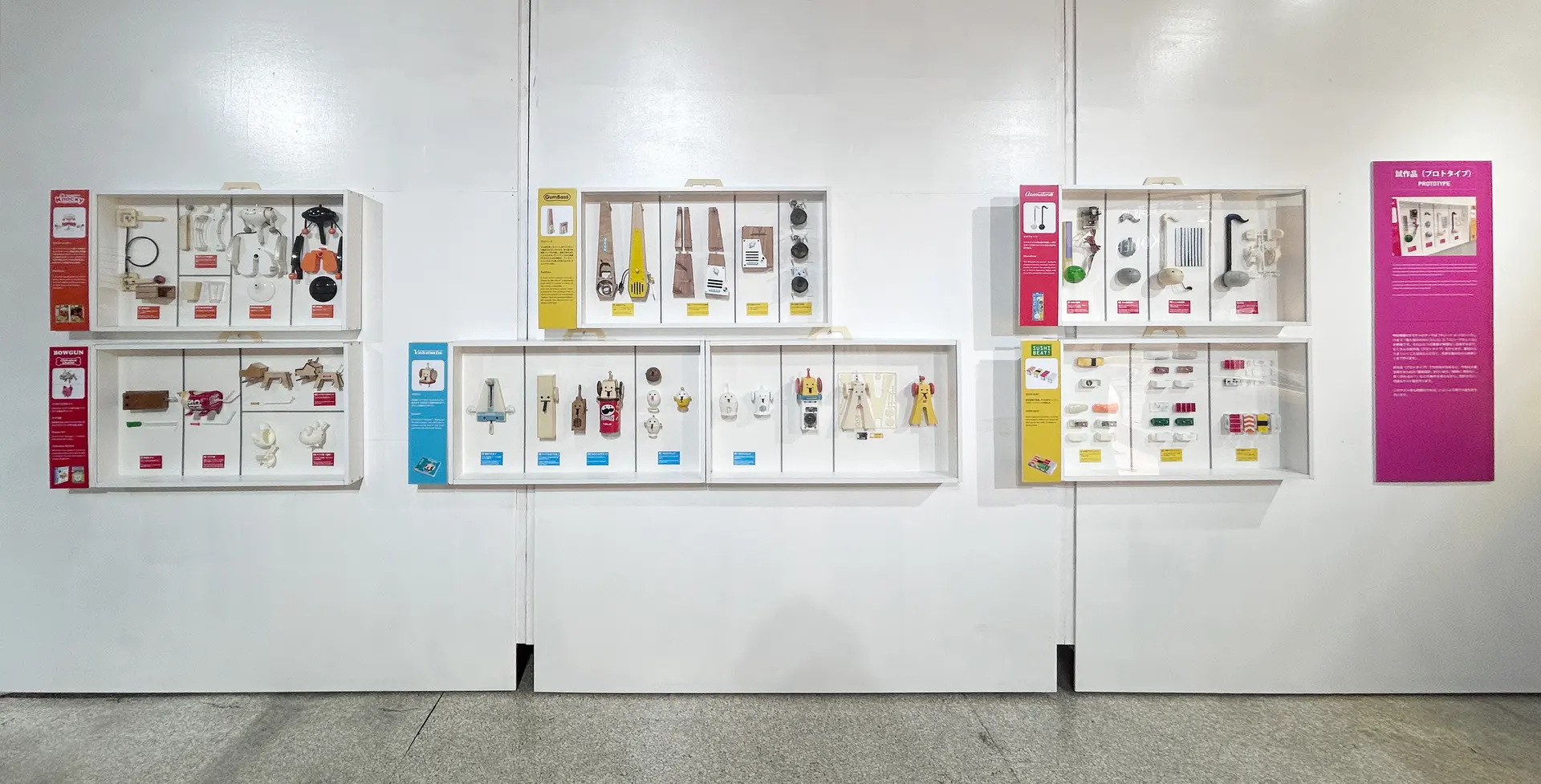
The walls are lined with prototype specimens — Otamatone, Sushi Beat, GumBass and more — displayed like scientific samples. Seeing the "in-between" forms of finished toys is something you can only do here.
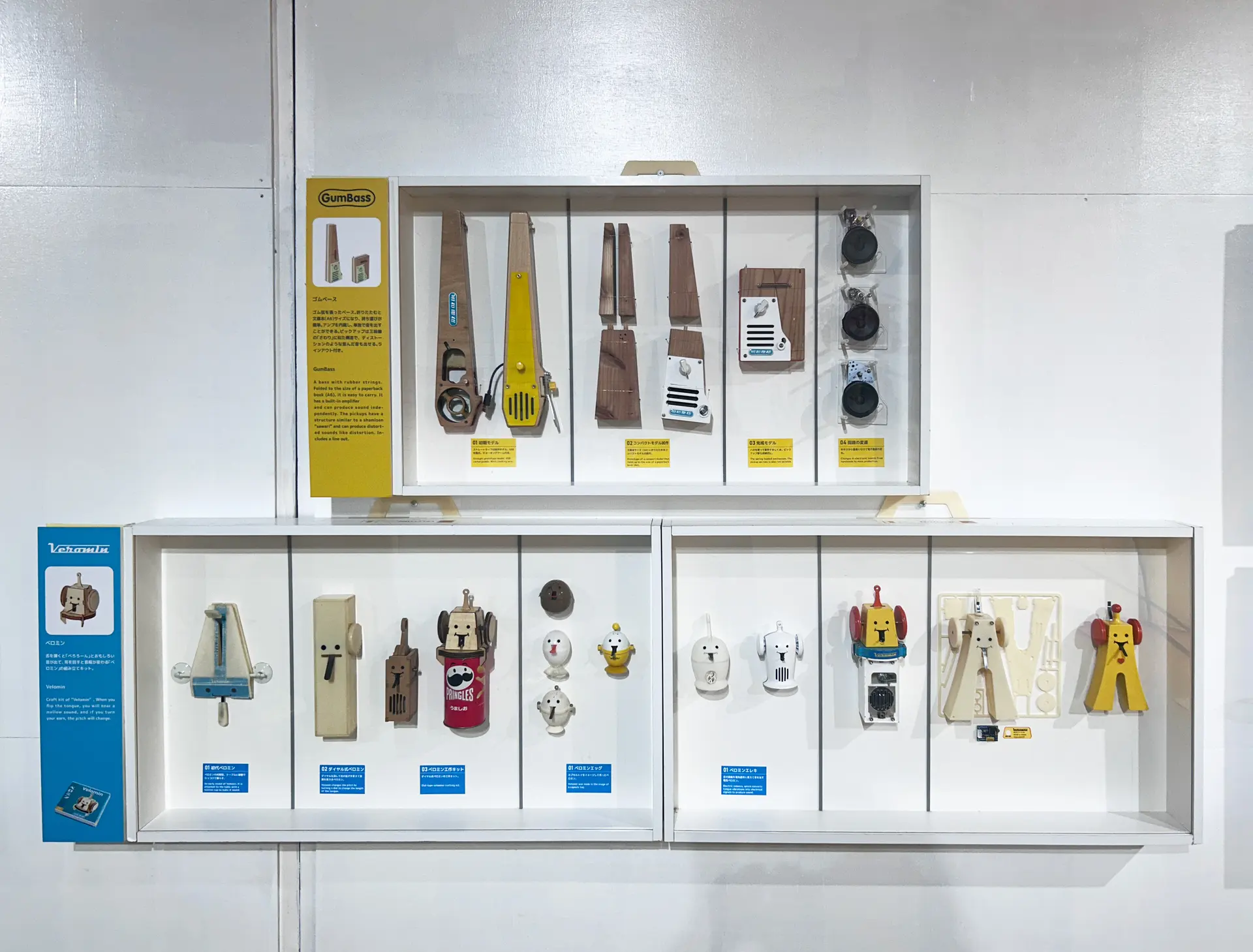
The mass production story is great too. While Otamatones are mass-produced by partner companies in factories in China, since the COVID era Maywa Denki has also started doing its own production runs with 3D printers and laser cutters — and Sushi Beat and GumBass are assembled in workshops in Musashi-Koyama and Fudo-mae. This sushi is genuinely locally sourced.
The Gift Shop Solved My Kid's Summer Homework
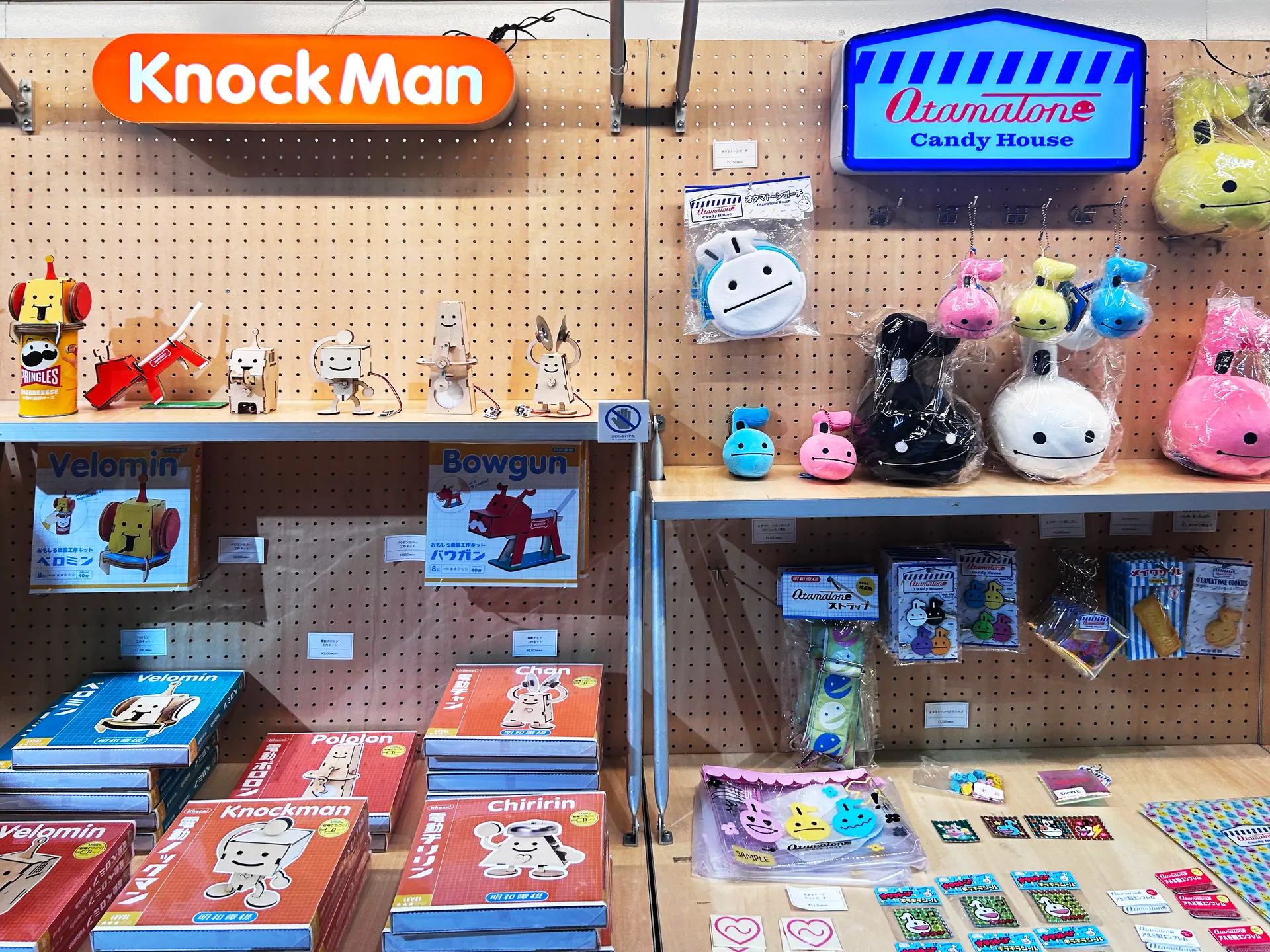
After playing ourselves out, we moved to the shop next door: Otamatones, toys, and Maywa Denki goods as far as the eye can see.
By the way, the Otamatone has a brand-new model out — the "Otamatone Q." Official video here.

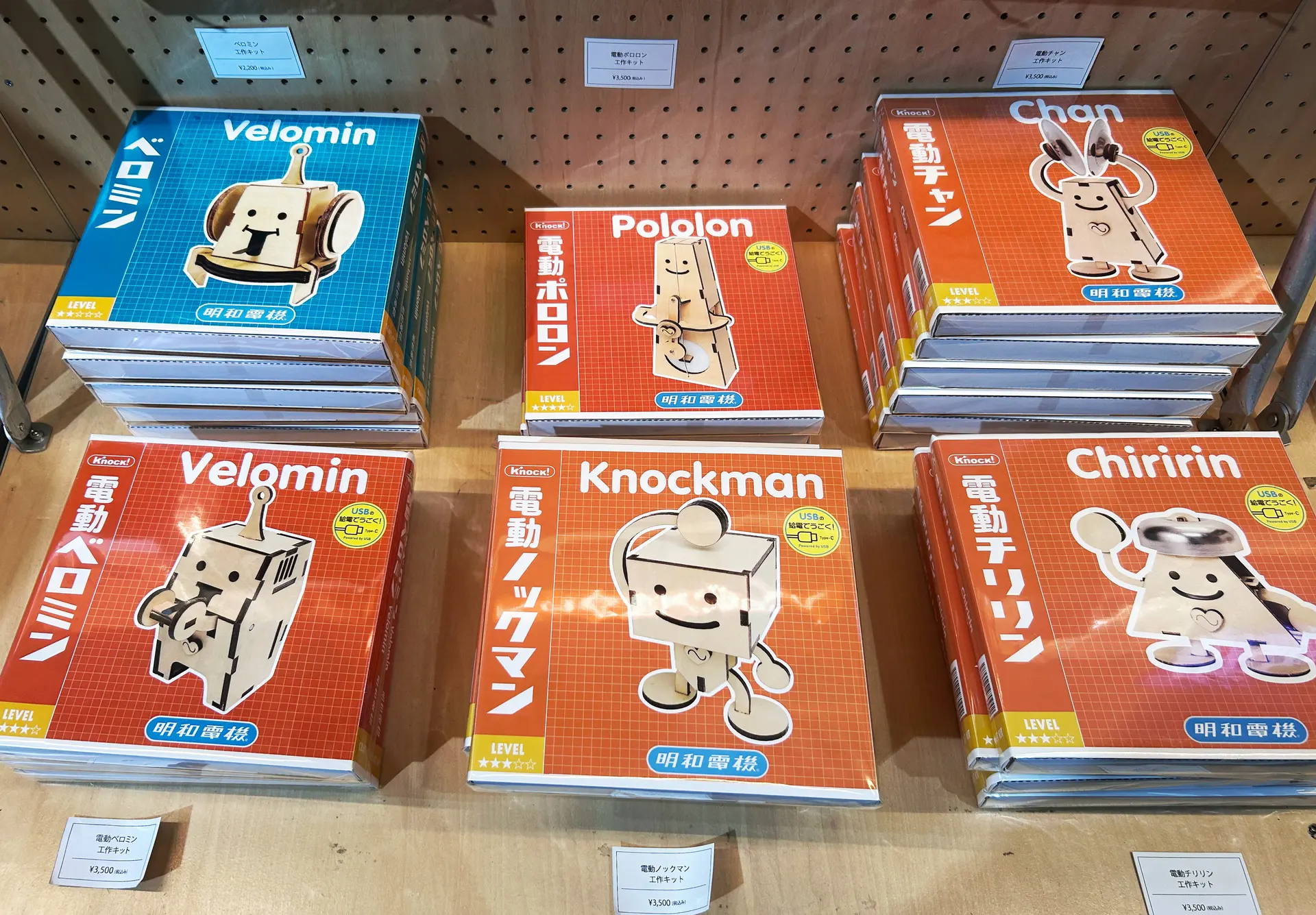
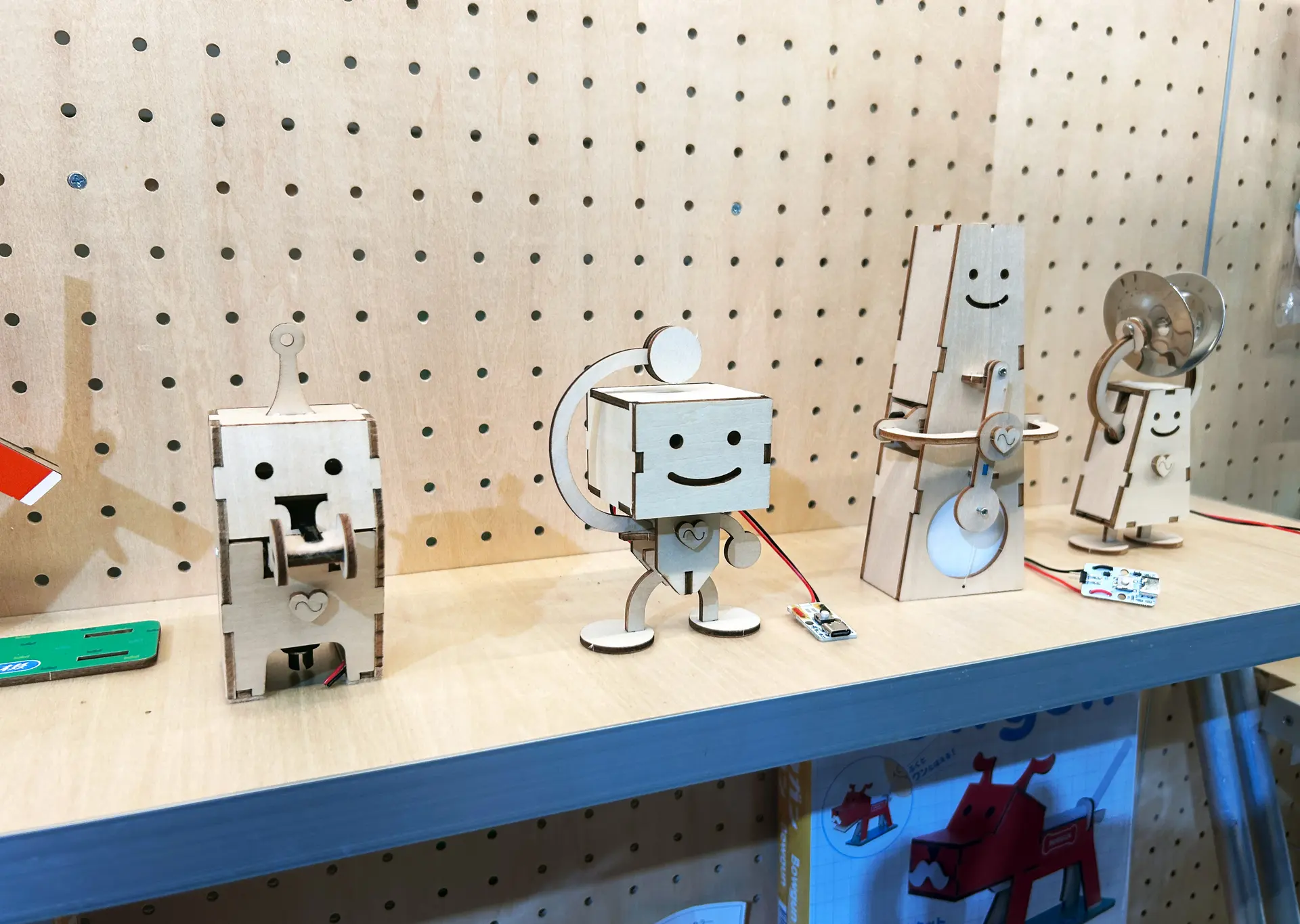
Here my son picked up a motorized Knockman craft kit and silently held it out to me. Apparently this will be his summer-vacation craft project. We agreed to buy it "next time we come" and put it back on the shelf — but picturing a little robot knocking itself on the head, pok-pok-pok, echoing through the school's summer craft exhibition, I'm already laughing. His classmates won't know what hit them.
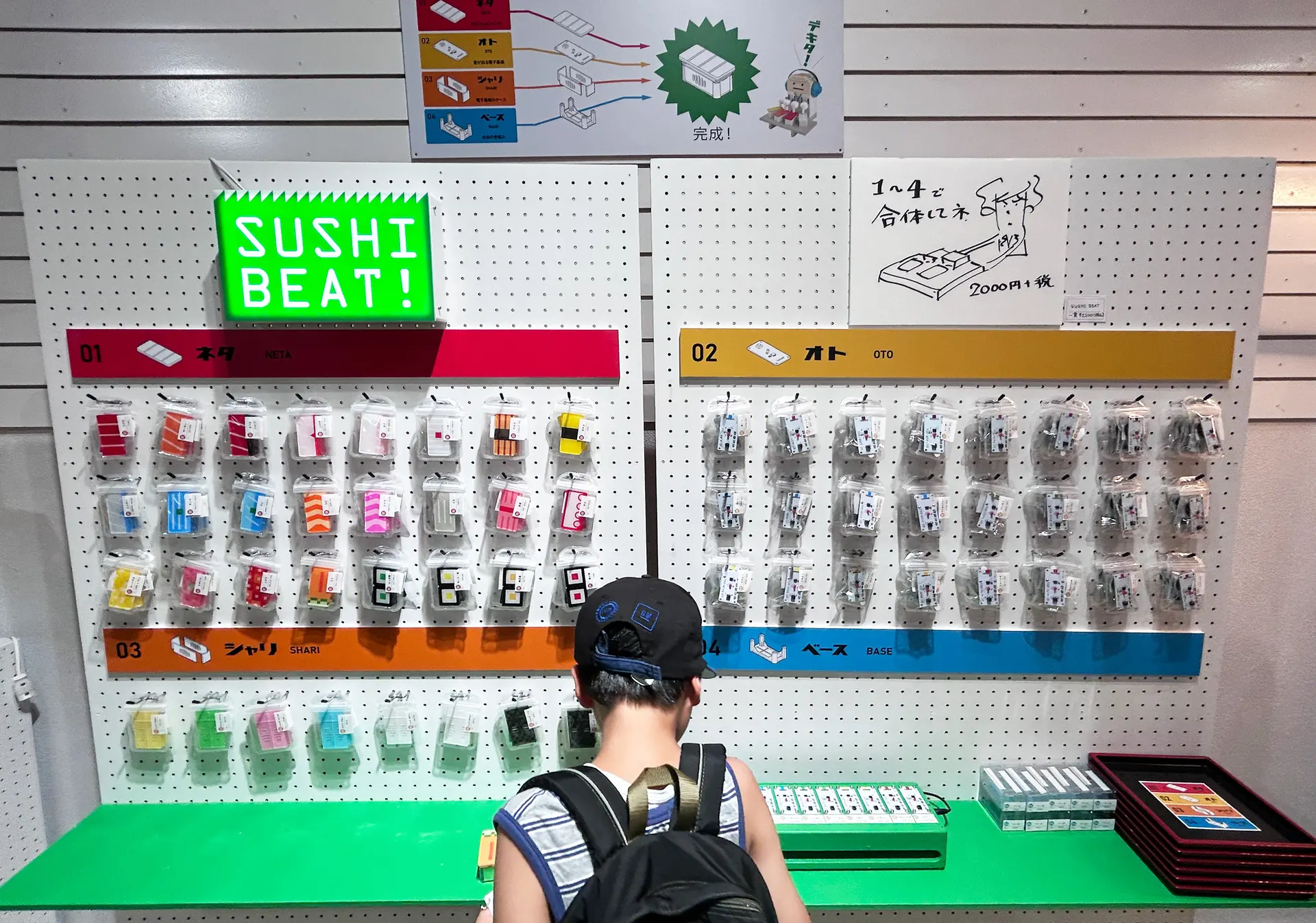
Sushi Beat is sold as four modules — "Neta," "Oto," "Shari," and "Base" — that you combine however you like, at 2,000 yen per piece. Think of it as high-end sushi and it starts to feel reasonable. We saved that one for "next time" too.
— Or so we thought as we left. We drifted around the Palm arcade for about an hour, and then, somehow, the three of us were walking through the entrance for the second time that day. The free pass pays for itself immediately. Hook, line, and sinker — thank you for a wonderful day off, Maywa Denki.
Visitor Info
- Exhibition: Maywa Denki "How a Toy Is Made" Exhibition
- Dates: July 19 – August 30, 2026 / closed Mondays (open on holidays)
- Hours: 11:00–18:00
- Venue: Palm Event Space, Musashi-Koyama Palm Shopping Arcade (3-3-18 Ebara, Shinagawa, Tokyo)
- Access: 1-minute walk from Musashi-Koyama Station (Tokyu Meguro Line)
- Admission: Free (card key for playing with exhibits: 600 yen, valid for the whole run)
RAW JAPAN's Takeaway
A museum inside a shopping arcade — a rare sight anywhere in Japan. You can wander in mid-shopping for free, play everything for 600 yen, and accidentally solve your kid's summer homework on the way out. For something that calls itself nonsense, this exhibition is suspiciously useful. If you find yourself in the Palm arcade, drop in and let an Otamatone heal you.
Reference: Maywa Denki official site / Shinagawa Tourism Association

Obsessed with Japan’s quirks, and a father of two. I hunt for those subtle, “wait, what?” moments that hide in everyday life.