
You Haven't Missed Japan's Fireworks. Two of the Big Three Are Still Ahead — The 2026 Late-Season Guide
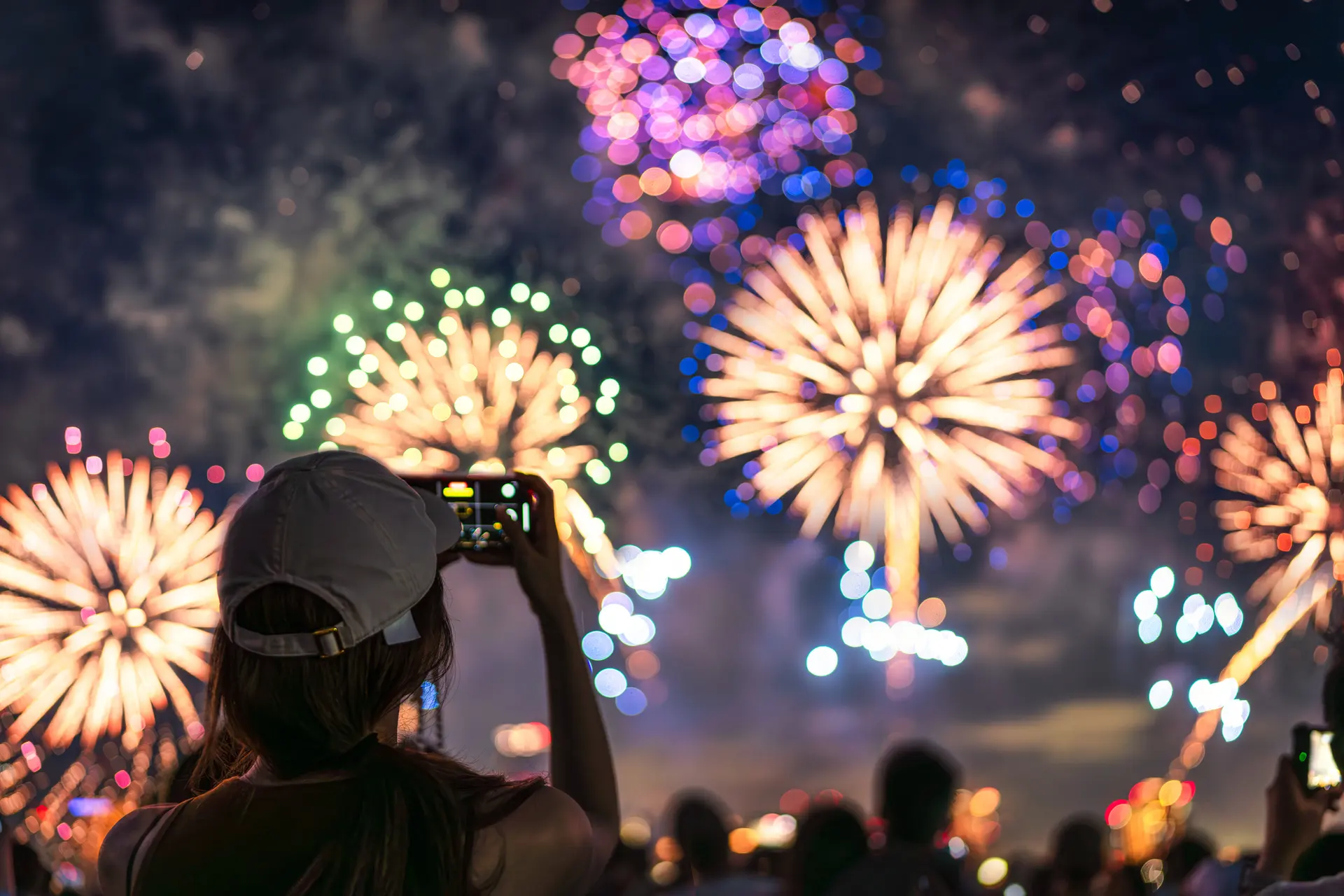 Photo by JaCZhou / iStockPhoto
You Haven't Missed Japan's Fireworks. Two of the Big Three Are Still Ahead — The 2026 Late-Season Guide
"Japanese fireworks are a summer thing. I missed August, so that's it, right?" — Wrong. Wonderfully wrong.
Two of Japan's Big Three fireworks festivals — Omagari (August 29) and Tsuchiura (November 7) — are still to come, and Osaka's massive Naniwa Yodogawa festival happens in October this year. Better yet, autumn air is clearer than summer haze, which means sharper, brighter fireworks. Here's your complete guide to the second half of 2026, from access to tickets.
First, Understand This: Japanese Fireworks Are a Competition
Japan's biggest fireworks events carry the word "kyogi taikai" — competition. That's not a metaphor. These are genuine national championships where pyrotechnicians from across the country battle with a year's worth of craft. The winner receives the Prime Minister's Prize — an award literally bearing the name of the nation's leader.
And these aren't just balls of fire. A "shakudama" shell about 30cm across blooms into a flower over 300 meters wide, judged on the perfection of its circle, its color transitions, even how cleanly it fades. Watching fireworks as an art competition — that's the Japanese way.
Aug 29 (Sat) | Omagari Fireworks, Akita — The National Championship
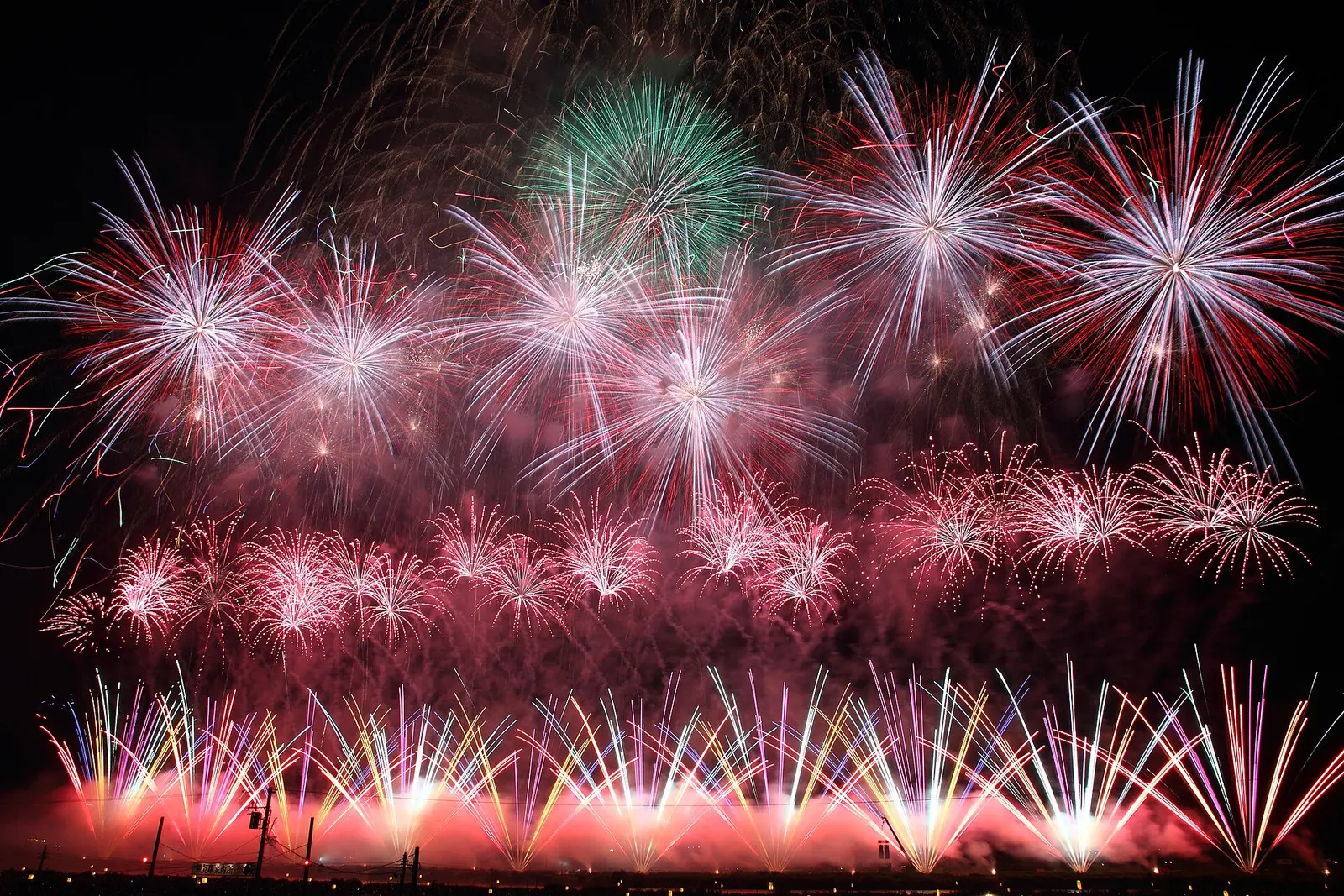
Photo by KANSEI / Wikimedia Commons (CC BY-SA 4.0)
Officially the "All-Japan National Fireworks Competition," now in its 98th year — the most prestigious fireworks event in Japan. Held on the Omono River banks in Daisen, Akita, it draws about 750,000 spectators to a city of 70,000. Ten times the population shows up.
The signature here: daytime fireworks. Before the night session (19:00–21:30), there's a daylight competition (from 17:10) where shells paint the sky with colored smoke. It's rare anywhere in the world, so arrive early.
- Access: About 3 hours from Tokyo to Omagari Station on the Akita Shinkansen "Komachi." Trains sell out — book reserved seats the moment they go on sale
- Hotels: Omagari itself sells out almost instantly. The standard play is staying in Akita City or Morioka and riding the Shinkansen in
- Tickets: Paid viewing seats sell in advance on the official site. The free areas are an early-morning turf war
Oct 17 (Sat) | Naniwa Yodogawa Fireworks, Osaka — Big City, Autumn Sky
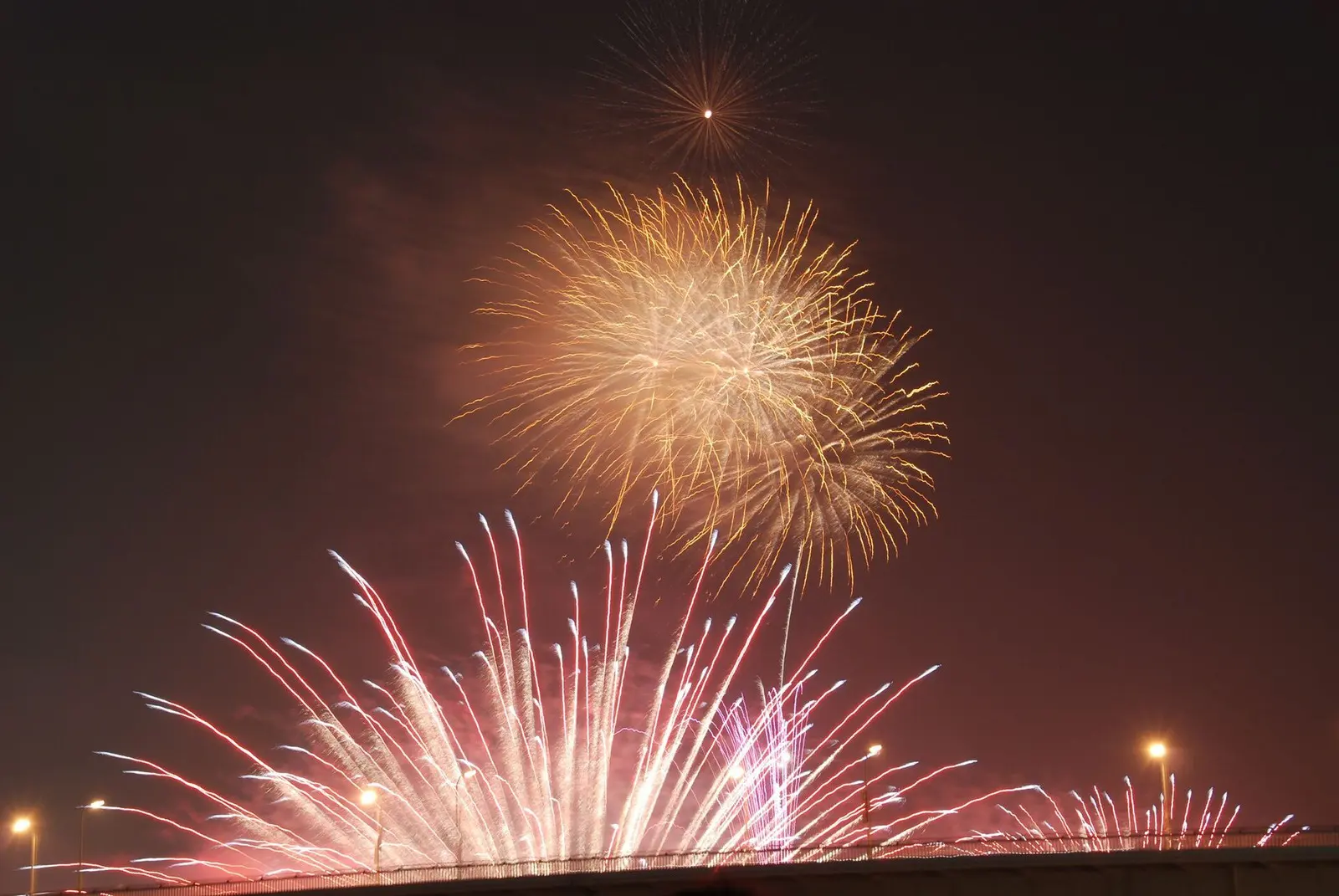
Photo by jetsun / Wikimedia Commons (CC BY-SA 3.0)
Osaka's beloved summer tradition moved to autumn last year, and the 38th edition is set for October 17 (Sat) from 19:00. Fireworks launch from the Yodogawa riverbank against the Umeda skyline, drawing around 500,000 people.
Its biggest strength: it pairs perfectly with Osaka sightseeing. Dotonbori and Shinsekai by day, fireworks by night — the full Osaka spectacle in a single day. The paid viewing plan from the Umeda Sky Building observatory is a perennial favorite.
Nov 7 (Sat) | Tsuchiura National Fireworks Competition, Ibaraki — The Other Championship
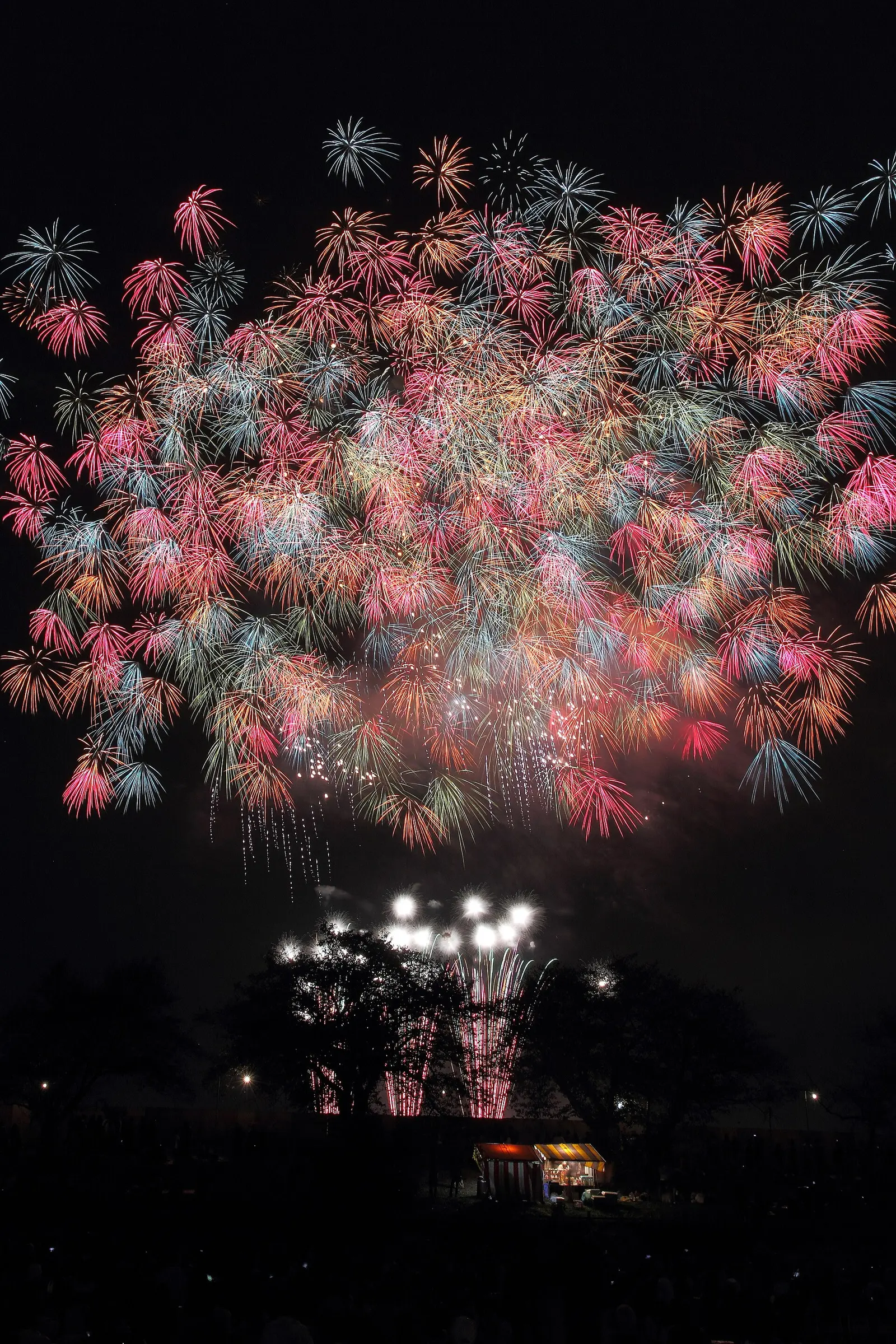
Photo by 河田貫成 / Wikimedia Commons (CC BY-SA 4.0)
Omagari's rival championship, now in its 95th year. Held in November, it's often called "Japan's last great fireworks of the year" and draws around 650,000 spectators every year.
Tsuchiura's specialty is crowning Japan's best Starmine — rapid-fire barrages of hundreds of shells composed like music. It's a completely different beast from single giant shells. Best of all, it's the most accessible of the big ones: about an hour from Tokyo on the Joban Line limited express. November nights get properly cold, so dress like you mean it.
A Survival Guide for First-Timers
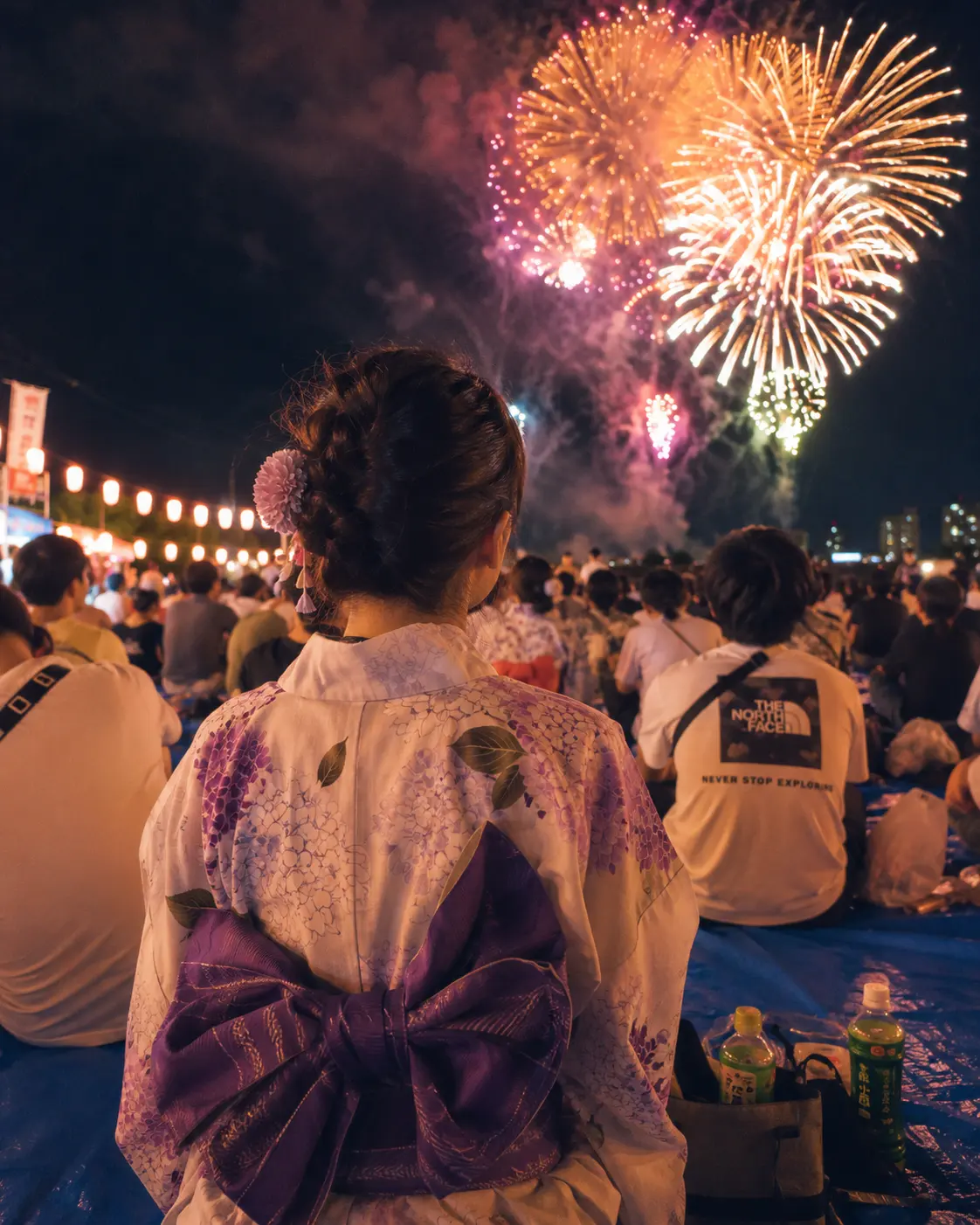
- Tickets: Big festivals sell paid reserved seating on their official sites. For a few thousand yen you buy "no turf war + guaranteed view" — as a traveler, always take the paid seat
- The tarp ritual: In free areas, Japanese folks claim spots with picnic sheets hours ahead. Sheets are sold at any convenience store
- Yukata: Wearing one triples the experience. Tourist areas rent them with fitting included from midday
- Food stalls: Yakisoba, shaved ice, candy apples. Bring cash, small bills
- The exodus: Stations right after the finale are barely-controlled chaos. Either linger an extra hour soaking in the afterglow, or slip out slightly early. Choose your fighter
Quick Reference
- Omagari Fireworks: Aug 29 (Sat) from 17:10 / Omono River, Daisen, Akita / Official site
- Naniwa Yodogawa Fireworks: Oct 17 (Sat) from 19:00 (planned) / Yodogawa riverbank, Osaka / Official site
- Tsuchiura Fireworks Competition: Nov 7 (Sat) from 17:30 / Sakura River, Tsuchiura, Ibaraki / Official site
- Check official sites for weather postponements
RAW JAPAN's Takeaway
Miss the summer fireworks? Japan's calendar still has three pages left — and two of them are national championships, where pyrotechnicians fire the shells they've bet an entire year on. That's a different level of intent than any tourist show. Clear autumn skies, crisp early-winter air: the season when fireworks look their absolute best is exactly when you're here.
Reference: Omagari official / Yodogawa official / Tsuchiura official

The Japan Travel series offers a condensed guide to the very best of Japan’s regions. From must-see sights and local experiences to food and lodging, everything you need to know before your trip is right here. Whether it’s your first visit or your fifth, you’re bound to discover something new.